NIPT
Non-Invasive Prenatal Testing (NIPT) examines cell-free fetal DNA from a maternal blood sample to screen for common chromosomal conditions, including Trisomy 13, Trisomy 18, and Trisomy 21. Non-Invasive Prenatal Testing (NIPT) is a major advancement in prenatal care, enabling our Genetics Lab to screen chromosomes 13, 18, 21, X, and Y as early as 10 weeks of pregnancy. NIPT accurately detects the most common forms of Trisomy 13 (Patau syndrome), Trisomy 18 (Edwards syndrome), and Trisomy 21 (Down syndrome), while also determining the baby’s gender through a simple, non-invasive blood test. The reliability of NIPT has been validated in multiple clinical studies, with major health organizations recognizing it as a significant step forward in non-invasive detection of chromosomal abnormalities.
Request an appointment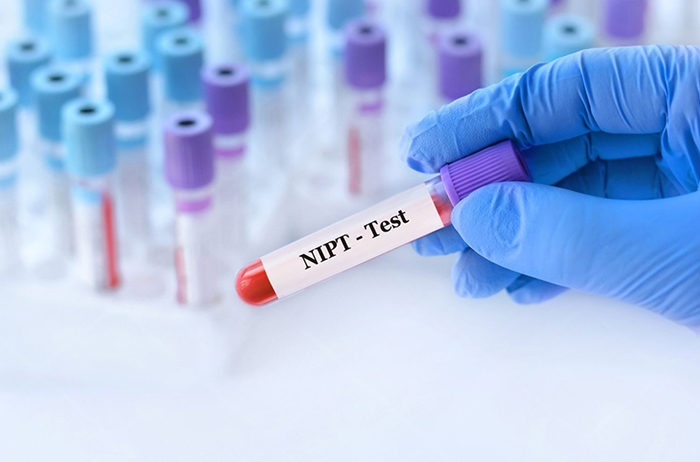
For women carrying twins, NIPT can be performed at 12 weeks, though the gender of the babies cannot be determined in such cases.
It is important to note that while NIPT provides highly accurate screening, it should be used alongside other antenatal screening and evaluation tests to ensure comprehensive prenatal care.
-
Who Should Consider NIPT?
Non-Invasive Prenatal Testing (NIPT) is recommended for high-risk pregnant women, especially if they meet one or more of the following criteria:
- Age 35 or older
- Previous history or family history of Trisomy 13, 18, or 21
- Abnormal results from earlier screening tests for Trisomy 13, 18, or 21
- Abnormal ultrasound markers (Level II ultrasound) suggestive of Trisomy 13, 18, or 21
For low-risk pregnancies, NIPT may be optional and should be discussed with your physician. During consultation, your doctor will review your personal risk factors for carrying a child with a trisomy.
-
How Does NIPT Work?
NIPT analyzes cell-free DNA (cfDNA) found in the mother’s bloodstream. These small fragments include maternal DNA as well as fetal DNA, which typically makes up 2–40% (on average about 10%) of the total cfDNA. The test screens for elevated levels of fetal DNA for specific chromosomes, which may indicate a trisomy in the unborn child.
-
Other Non-Invasive Antenatal Screening Tests
Traditional non-invasive screenings for Down syndrome and trisomies 13 and 18 include:
- First-trimester blood tests
- Second-trimester blood tests
- Nuchal translucency ultrasound
-
Diagnostic Tests for Trisomies
To confirm the presence of Trisomy 13, 18, or 21, an invasive test such as amniocentesis is required. During amniocentesis, a small sample of amniotic fluid is collected, containing fetal cells (amniocytes), which are then analyzed for chromosomal abnormalities.
-
How Does Down Syndrome Develop?
Human genetic material is organized into chromosomes. Before each cell division, chromosomes duplicate and are distributed to daughter cells through a process called meiosis. Errors in this process can result in an abnormal number of chromosomes, which may prevent proper development or cause miscarriage. The most common chromosomal error is trisomy 21, where chromosome 21 appears three times instead of twice, resulting in Down syndrome.